Work & Talent
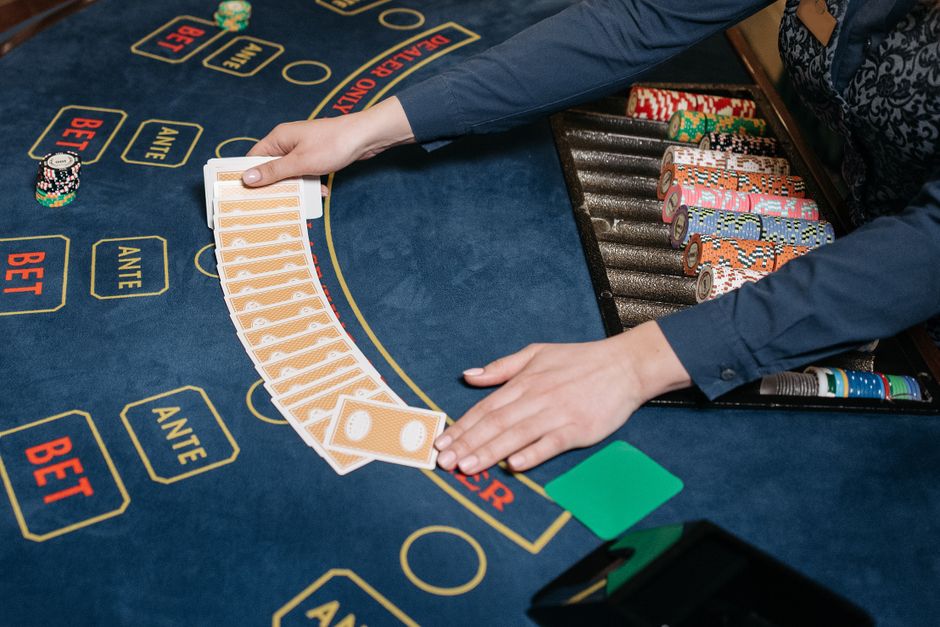
Every gambler has heard the phrase "the house always wins." It's true in the long run, but that's exactly the problem with the way most people treat it. The house doesn't win because the games are rigged. It wins because the math is structured so that every bet favors the operator by a small, persistent margin. Understanding that margin — and how to work around it — is the difference between gambling and playing with an edge. Let's pull back the curtain on how casino games, sports betting, and poker actually work.
House edge is the mathematical advantage the casino holds on every bet you place. It's not a fee taken out at the end. It's baked into the payout structure. For example, a standard American roulette wheel has 38 numbers — 1 through 36 plus 0 and 00. If you bet a single number and win, you get paid 35-to-1. But true odds of hitting that number are 37-to-1. That gap — 2 units on a 38-unit wheel — represents a 5.26% house edge. Bet $100 on a single number 100 times, and you'll lose about $5.26 per spin on average, despite occasional wins.
Compare that to European roulette, which has only one zero (37 numbers total) and a house edge of 2.70%. Same game, nearly half the bleed. Or blackjack, where basic strategy can reduce the edge to under 0.5% depending on rule variations. The lesson: not all bets are created equal, and small percentage differences compound brutally over time.
Slots are the most popular form of gambling worldwide, and also the most misunderstood. Every slot has an RTP (Return to Player) percentage — typically between 92% and 97% in regulated markets. That means for every $100 wagered, the machine is designed to return $92 to $97 over millions of spins. The casino keeps the rest.
But RTP isn't the whole story. Volatility matters just as much:
Here's a concrete example: A slot with 96% RTP and high volatility might have a max win of 50,000x your stake, but the probability of hitting that is roughly 1 in 10 million spins. Meanwhile, a low-volatility slot with 96% RTP might cap at 500x but hit it every 500 spins. Your bankroll strategy should change depending on which you pick. A $100 bankroll on a high-volatility slot at $1 per spin can vanish in 15 minutes. The same bankroll on a low-volatility slot might last two hours. For more on this, see สล็อต.
Sports betting feels more skill-based than slots, and in some ways it is. But the bookmaker's margin — called the vig or juice — is just as real. A standard -110 line on both sides of a spread means you must win 52.4% of your bets just to break even. That's a tough ask for casual bettors.
Where sharps separate themselves is by exploiting line movement and finding soft numbers. Here's a typical workflow:
Most recreational bettors lose because they bet on teams they like, chase losses, or take parlays with massive house edges (often 20-30% on long-shot combinations). Discipline beats gut feeling every time.
Poker is unique because you're not playing against the house — you're playing against other players. The casino takes a rake (typically 5-10% of each pot, capped at a few dollars), but that's a fixed transaction cost, not a mathematical edge against you on every hand. In theory, a skilled player can win consistently.
What separates winning poker players from losing ones?
If you're new to poker, start with micro-stakes online (1c/2c blinds) and track every session. After 10,000 hands, you'll have a rough idea of whether you're winning or losing. Most players are losing players, and that's okay — but knowing the numbers helps you decide whether to improve or walk away.
No strategy matters if you go broke. Bankroll management is the least exciting part of gambling, but it's the most important. Here are some hard rules that experienced players follow:
These rules don't guarantee profits. They guarantee you'll survive long enough to make good decisions instead of desperate ones.
The house edge is real, but it's not invincible. The bettors and players who last are the ones who treat gambling as a math problem, not an emotional rollercoaster. They know which games have the lowest edges, they track their results honestly, and they never bet more than they can afford to lose. The casino will still win most of the time — but you don't have to be most people. You just have to be patient, disciplined, and honest about the numbers. That's the only edge that truly matters.
