Work & Talent
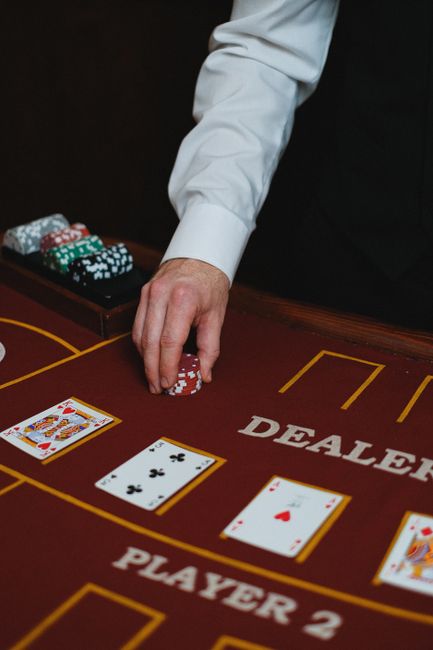
You're about to lose €200 on a slot machine. Not because you're unlucky, but because you pressed spin 200 times at 20 cents per spin. That's not gambling—that's math obliterating your bankroll in slow motion. But here's the thing: the same math that drains your wallet can also be your best ally. Welcome to the unvarnished truth about iGaming, where casinos aren't charity houses and poker isn't luck. Let's talk shop.
Every slot spin costs you exactly what the developer programmed in. That number is the house edge, and for most video slots, it sits between 2% and 10%. A 5% edge means for every €100 you wager, you lose €5 on average—over millions of spins. But here's the kicker: variance is a beast. In a single session, you might win 1000x your bet or lose 50 spins straight. The edge doesn't care about your feelings.
So what actually matters? Volatility. High-volatility slots like Book of Dead or Bonanza pay rarely but hit hard when they do. Low-volatility games like Starburst dribble out small wins constantly. Neither is 'better'—they just match different bankrolls. A €100 bankroll on a high-volatility slot is suicide. On a low-vol one, you might survive 45 minutes.
And those RTP percentages? Return to Player is the flip side of the house edge. A 96% RTP slot returns €96 for every €100 wagered over time. But that time is theoretical—it's based on millions of spins. In your 200-spin session, RTP means nothing. You're dealing with pure chaos. The only real strategy is controlling your bet size relative to your bankroll. A rule of thumb: never bet more than 1% of your bankroll per spin. Got €200? Spin at €2 max. That gives you 100 spins of runway.
Forget everything you've seen in movies. Poker isn't about reading tells or shouting 'all in' with a smirk. It's a math problem disguised as a card game. In Texas Hold'em, the best players win because they understand pot odds, position, and range analysis. The cards are just the medium. More background can be found at สล็อต.
Here's a concrete example. You hold A♠ K♠ on the button. A tight player raises from early position. You 3-bet. They call. Flop comes Q♠ 9♦ 3♠. You have a flush draw and two overcards—roughly 15 outs (9 spades + 3 aces + 3 kings). Using the rule of 4 and 2: on the flop, multiply outs by 4 to estimate your chance of hitting by the river. 15 outs × 4 = 60% equity. That's massive. You should bet or raise, not call. Most amateurs call because they 'want to see the turn.' That's not poker—that's bingo.
But here's the hard truth about online poker: the rake kills small stakes. At €0.01/€0.02 tables, the house takes 3.5% to 5% of every pot, capped at €0.50. That adds up. To beat the rake, you need to be in the top 10% of players at your limit. Otherwise, you're just donating. The solution? Move up to €0.10/€0.25 where the rake is proportionally smaller, or play tournaments with fixed fees. And always, always track your win rate. If you're not tracking, you're guessing. Guessing loses.
Sports betting isn't about picking winners. It's about finding value—when the odds imply a lower probability than the actual probability. Say a tennis player has a 60% chance to win, but the bookmaker offers 2.10 decimal odds (implied probability 47.6%). That's value. You bet consistently on those situations and you profit long-term, even if you lose 4 out of 10 bets.
The bookmaker's edge comes from the overround. In a two-way market, the odds usually sum to more than 100%. Example: Player A at 1.90 and Player B at 1.90. Implied probabilities: 52.6% + 52.6% = 105.2%. That extra 5.2% is the bookie's margin. Sharp bettors hunt for markets where that margin is under 4%. Asian handicaps and exchange markets (like Betfair) often have margins below 2%.
Bankroll management is non-negotiable. Flat betting—same stake every time—is safer than percentage betting for beginners. But for value bettors, Kelly Criterion is the gold standard. It calculates the optimal stake based on your edge. A 10% edge on a 2.50 bet means you stake 10% / (2.50 - 1) = 6.7% of your bankroll. Sounds aggressive? That's why many pros use half-Kelly or quarter-Kelly to reduce variance.
That 100% match bonus up to €500 looks juicy. Then you read the fine print: 40x wagering requirement, max bet €5, slots contribute 100%, table games 10%, and you have 30 days to clear it. Let's do the math. You deposit €100, get €100 bonus. To clear the €100 bonus at 40x, you need to wager €4,000. At a 4% house edge on slots, your expected loss is €160. You're essentially paying €160 for a €100 bonus. That's a negative EV—a losing proposition.
Not all bonuses are garbage, though. Look for:
And always read the terms for 'sticky bonuses'—where the bonus is removed when you withdraw, leaving you with only your own money. Those are almost always a trap.
Here's the part most blogs skip. The house edge guarantees that if you play long enough, you lose. That's not pessimism—it's arithmetic. The only way to win is to stop while you're ahead. Set a loss limit before you start. €50, €100, whatever hurts but won't ruin you. And a time limit. Two hours max. When you hit either limit, you quit. No 'one more spin.' No 'double or nothing.'
Use deposit limits, session reminders, and self-exclusion tools that every licensed casino offers. If you feel a pang of anxiety when you can't play, that's a red flag. Take a week off. If you can't, seek help. The smartest gamblers are the ones who know when to walk away. The game is designed to keep you playing. Your job is to be the exception.
iGaming is entertainment, not a retirement plan. Slots are programmed to win. Poker rewards discipline. Sports betting rewards research. Bonuses are marketing, not free money. And the only strategy that consistently works is managing your bankroll like it's a lifeline—because it is. Play for fun, play within your means, and never bet what you can't afford to lose. The house always wins. Unless you don't play their game.
